

We are an innovative enterprise specializing in the deep processing of carbon fiber, aramid fiber, flat fabric, three-dimensional weaving, and special texture blended, pre impregnated, and forged products, as well as molded, hot pressed, and extruded carbon fiber products.
Why Choose Us
Our Factory
Qingdao Wangzhan was established in 2012 and is a high-tech private enterprise leading the composite weaving industry.The factory covers an area of over 7000 square meters,300+Machine processing equipment.
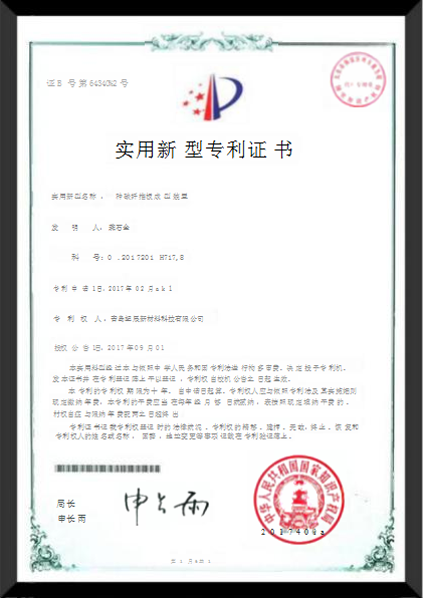
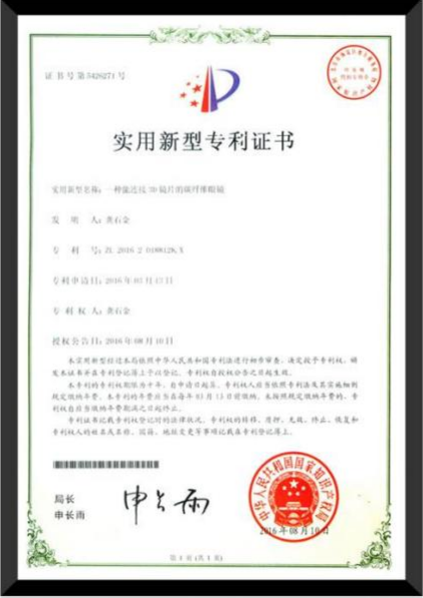
Our Certificates
We have passed ISO 9001 management system and intellectual property management system certification. We have also been awarded the title of provincial high-tech enterprise and hold more than 50 patent certificates.
Partners
Currently, we cooperate with global industry-leading suppliers, including Toray from Japan, Mitsubishi from Japan, Hexcel from the United States, Zhongfu Shenying from China, Weihai Guangwei, Cathay Pacific, DuPont from the United States, Jushi from China, Sinoma Technology, Micron from the United States, Kentian from the United States, FK from the United States, and Daiplatinum from Sweden.


Advantages of Aramid Kevlar
Exceptional strength
The para-aramid fiber known as "Kevlar" has a relative density of 1.44 and a tensile strength of about 3,620 MPa. This makes it strong while remaining lightweight.Kevlar's chemical structure is made up of several repeating inter-chain bonds. Due to the hydrogen bonding in these chains, their tensile strength is 10 times greater than steel's for equal weight.
Zero thermal shrinkage
Kevlar retains its strength and resilience down to cryogenic temperatures (196C), implying that there is no embrittlement at such low temperatures.It can also withstand temperatures of up to 450C. It becomes a little bit stronger at cold temperatures. The tensile strength diminishes by around 1020% right away at higher temperatures and continues to decline over time.
Heat and Flame Resistance
After more than 200 days of exposure to heat, such as hot water, Kevlar fiber can remain virtually unchanged. Kevlar is naturally flame resistant, withstanding temperatures of up to 800 degrees Fahrenheit.
Resistant to tearing and stretching
Because of their high resistance to impact damage, aramid fibers are frequently used in areas prone to impact.Kevlar fiber's completely expanded and well-aligned molecular chains act as a powerful barrier to prevent wounds, scratches, and pricks.It is resistant to almost all types of chemicals, giving it the properties of high cut resistance.
High-velocity defense
Kevlar fibers are so tightly spun that separation is nearly impossible. When a bullet or other high-velocity projectile strikes Kevlar, the fibers absorb and dissipate the energy.
Specification of Aramid Kevlar
|
Physical Properties |
Metric |
English |
|
Specific Heat Capacity |
1.42 J/g-°C @Temperature 25.0 °C |
0.339 BTU/lb-°F @Temperature 77.0 °F |
|
Thermal Conductivity |
0.0400 W/m-K |
0.278 BTU-in/hr-ft²-°F |
|
Maximum Service Temperature, Air |
149 - 177 °C |
300 - 351 °F |
|
Shrinkage |
<= 0.10 % |
<= 0.10 % |
Application of Aramid Kevlar
Coated aramid fabric and protective clothing
Coated aramid fabric is commonly used in the production of protective clothing. Its high puncture resistance and heat tolerance make it perfect for producing body armor, cut-resistant gloves, firefighting uniforms, and spacesuits.
Aerospace and automotive industries
In the aerospace and automotive industries, where strength-to-weight ratio is a key concern, Kelvar is often used. Its lightweight, high-strength characteristics make it ideal for producing parts that withstand high stress and impact.
Sports equipment
Coated aramid fabric's high tensile strength and puncture resistance make it a valuable material in sports equipment like racing sails, bicycle tires, and high-performance gear.
Industrial applications
Coated aramid fabrics come into play in industries where equipment must withstand harsh conditions. These fabrics make heat-resistant and cut-resistant covers, conveyor belts, and high-pressure hoses.
Coated aramid fabric and electronics
Kelvar is also used in the electronics industry due to its excellent thermal, chemical, and dimensional stability.

Kevlar belongs to a class of synthetic fibers known as aromatic polyamides, or aramids. The chemical structure of Kevlar consists of long, rod-like polymer chains that are highly oriented and hydrogen-bonded, creating a rigid and tightly packed fiber. This molecular arrangement gives Kevlar its extraordinary strength and heat resistance.
Para-Aramid: Kevlar is a para-aramid, meaning the amide groups (-CO-NH-) in its polymer chain are linked at the para positions (1,4 positions) of the benzene rings. This arrangement provides the fiber with high mechanical strength and stiffness.
Hydrogen Bonds: The strong hydrogen bonds between the polymer chains enhance Kevlar's rigidity and stability, making it resistant to stretching and deforming under stress.
Material of Aramid Kevlar
|
Material |
Strength-to-weight |
Ultimate Tensile Strength |
Density |
|
Kevlar |
2514 |
2757 |
1.44 |
|
Carbon Fiber |
2457 |
4137 |
1.75 |
|
E Glass Fiber |
1307 |
3450 |
2.57 |
|
Carbon Laminate |
785 |
1600 |
1.5 |
|
E Glass Laminate |
775 |
1500 |
1.97 |
|
Nylon |
69 |
75 |
1.15 |
Our Certifications



As one of the leading aramid kevlar manufacturers and suppliers in China, we warmly welcome you to buy high-grade aramid kevlar made in China here from our factory. All our products are with high quality and competitive price.
aramid inserts, Aramid Fiber Cloth