

We are an innovative enterprise specializing in the deep processing of carbon fiber, aramid fiber, flat fabric, three-dimensional weaving, and special texture blended, pre impregnated, and forged products, as well as molded, hot pressed, and extruded carbon fiber products.
Why Choose Us
Our Factory
Qingdao Wangzhan was established in 2012 and is a high-tech private enterprise leading the composite weaving industry.The factory covers an area of over 7000 square meters,300+Machine processing equipment.
Our Certificates
We have passed ISO 9001 management system and intellectual property management system certification. We have also been awarded the title of provincial high-tech enterprise and hold more than 50 patent certificates.
Partners
Currently, we cooperate with global industry-leading suppliers, including Toray from Japan, Mitsubishi from Japan, Hexcel from the United States, Zhongfu Shenying from China, Weihai Guangwei, Cathay Pacific, DuPont from the United States, Jushi from China, Sinoma Technology, Micron from the United States, Kentian from the United States, FK from the United States, and Daiplatinum from Sweden.


Advantages of Prepreg
Mechanical Performance
Its simple, an optimized fiber to resin ratio provides the best mechanical properties in the lightest weight for a composite design or fabrication. Prepregs provide just that.
Process Robustness
Prepregs provide a much cleaner and easier processing from ply cut to demold. Clean and easy ply cut of prepregs result in accurately ply shapes that are then easily laid up into mold surfaces. No longer is there a sticky mess of resin coming from your gloves while trying to layup large plys of complex surfaces while handling brushes or squeegees. No longer is there even resin mixing, no working times down to the min to worry about, no complicated system of resin feed lines, no worrying if the spray adhesive will affect a part's surface finish. The list is nearly endless with it comes to reducing man hours, touch times, and efficiency of composite fabrication processes.
Repeatability & Uniformity
Process robustness and consistency go together in effectively fabricating repeatable high-quality parts. Prepregs mitigate process variation as it is optimized with features such as tack, cured ply thickness, and a debulking capability that make even the most complicated laminates easier. Prepregs are consistent, simply pull the backing from the cut plys and lay it into the mold, conforming the ply to the mold as needed. Once the layup is complete, the bagging and curing process is much less complicated than that of an infusion process.
Co-cure > Secondary Cure
One large advantage to using prepregs in composites lies in the ability to co-cure many aspects of a composite laminate in one shot. Co-curing adds to the high-performance capability because co-cured laminates share stronger bonds than that of secondary bonds. Products such as film adhesives allow core bonded composites to be made in one cure run with the prepreg fabric layers. In addition, large core pieces can be joined via syntactic films, lighting strike protection can be added to the surface of conductive materials and other film adhesives can be used to provide a higher quality surface finish.
Specification of Prepregs
We offer the following specifications
|
List of Woven Carbon Fiber Prepregs (Plain and Twill) |
|||
|
Dry weight |
Resin content |
Final weight |
Thickness |
|
3k 200 gsm |
40% |
330 gsm |
0.23mm |
|
6k 320 gsm |
40% |
535 gsm |
0.36mm |
|
12K 400 gsm |
45% |
725 gsm |
0.45mm |
|
12K 600 gsm |
40% |
980 gsm |
0.60mm |
|
List of Unidirectional Carbon Fiber Prepregs(UD) |
|||
|
Dry weight |
Resin content |
Final weight |
Thickness |
|
20 gsm |
50% |
40 gsm |
0.03mm |
|
30 gsm |
40% |
50 gsm |
0.05mm |
|
54 gsm |
38% |
78 gsm |
0.06mm |
|
75 gsm |
32% |
110 gsm |
0.075mm |
|
100 gsm |
35% |
155 gsm |
0.1mm |
|
150 gsm |
35% |
230 gsm |
0.15mm |
|
200 gsm |
35% |
300 gsm |
0.20mm |
|
300 gsm |
35% |
460 gsm |
0.35mm |
Types and Application of Prepreg
Prepreg in Composites
Prepreg is a semi cured sheet made by impregnating reinforced fibers or fabrics into a matrix, and is an intermediate material in composite materials.The main reinforcing materials include carbon fiber, glass fiber, aramid, and their fabrics.The main matrix materials include epoxy resin, vinyl ester, phenolic resin, bismaleimide, cyanate ester, polyimide, and thermoplastic resin.
Compared to other materials, composite materials produced using prepreg can improve various characteristics such as strength, hardness, corrosion resistance, fatigue life, wear resistance, impact resistance, and lightweight.According to the type of fiber, the arrangement of fibers, and the type of matrix material used, it can be used in the production and manufacturing of civil aircraft, automotive industry, energy industry, sports and leisure products industry, etc.

Carbon Fiber Prepreg
Carbon fiber prepreg is a composite material prepared by special processes from high-performance fibers and resin matrix. It combines the high strength and high modulus of carbon fiber with the excellent processing performance of resin matrix. The resin matrix plays a role in bonding carbon fibers together and endows the composite material with good processing performance and molding ability.
According to the application field and performance requirements, different types of carbon fibers and resin matrices can be selected for prepreg. Carbon fiber types include PAN based carbon fiber, adhesive based carbon fiber, etc., while resin matrices include epoxy resin, phenolic resin, bismaleimide resin, etc. By selecting the appropriate material composition, carbon fiber prepregs with different performance characteristics can be prepared.

Craftsmanship of Prepreg
Prepregs are produced using two main processes: hot melt process and solvent dip process.
Hot Melt Process
Both fabric and unidirectional prepregs can be produced using the hot melt process. There are two stages in this process. The first stage involves coating a thin film of the heated resin on a paper substrate. The reinforcement material and the resin are allowed to interact in the prepreg machine. On application of pressure and heat, the resin is impregnated into the fibre resulting in the final prepreg, which is ultimately wound on a core.
Solvent Dip Process
Only fabric prepregs can be produced using the solvent dip process, which involves dissolving the resin in a solvent bath and dipping the reinforcing fabric in the resin solution. Using a drying oven, the solvent is then evaporated off the prepreg.
Requirements of Prepreg
First, prepare your mold as you usually would. To obtain a glossy finished part, it is necessary to have a flawless mold which has been waxed and coated with PVA. The prepreg is supplied between two backing sheets which need to be peeled away before laying the fabric into the mold. Because the prepreg surface is very tacky, it is necessary to place the material carefully into the mold. Unlike a dry fabric in a hand lamination, you cannot reposition the prepreg without fixing your mold release. Repositioning will pull up the PVA. You can continue to place layers on top of each other up to a total thickness of one-quarter inch at a single time.
(Note: You can use water-based mold releases which tend not to pull up when repositioning but as always, these mold releases tend to result in a duller and potentially swirled surface.)
The prepreg is partially cured which means that it is in B-Stage. It can be trimmed, pleated, and formed using a knife or a pair of scissors. The prepreg handles very easily and because of its tackiness, it will lay tightly into your mold. You might still have relief cuts or pleats to contend with just like you would with a dry fabric.
After placing the layers in the mold, the prepreg must be compressed to allow bonding, to remove any trapped air between the layers and to squeeze out any excess resin. Although there will be very little excess, the resin will naturally become thinner as the temperature is raised and there will be resin flow prior to a full cure of the resin.
The needed compression can be accomplished using a press but unless the part is perfectly flat, a press is not an option. Consequently, the part is generally vacuum bagged.
After the layup is complete, the vacuum bag is built and sealed, and you are ready to pull vacuum and begin the heat cycle. There are three recommended cure cycles for prepregs and all will produce similar properties.
All curing cycles begin with a temperature ramp up and end with a ramp down. The difference is the target temperature and the amount of time required for a complete cure. Always ramp up at a rate of no more than 5°F per minute until the target temperature is attained. Maintain the target temperature throughout the cure cycle and then ramp down at a rate of less than 5°F per minute to at least 150°F before removing from the oven.
Our Certifications
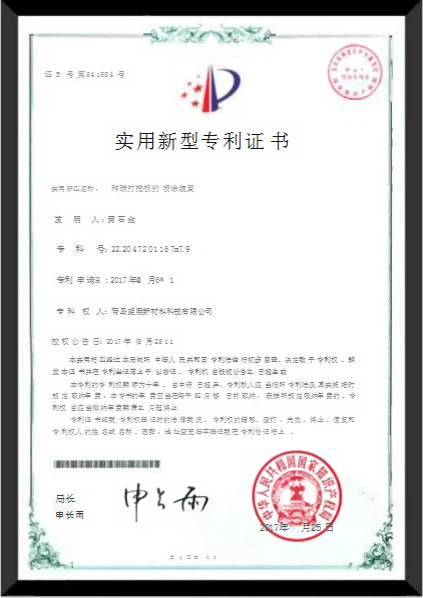
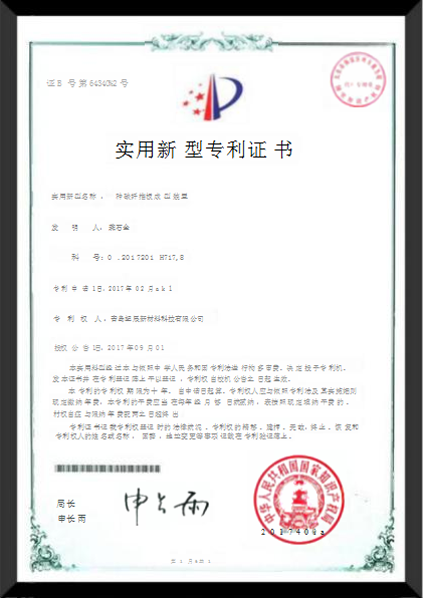
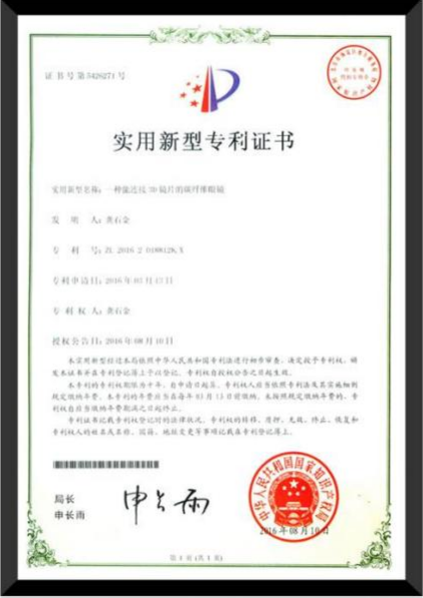


As one of the leading prepreg manufacturers and suppliers in China, we warmly welcome you to buy high-grade prepreg made in China here from our factory. All our products are with high quality and competitive price.
Carbon Fiber Prepreg, prepreg