

We are an innovative enterprise specializing in the deep processing of carbon fiber, aramid fiber, flat fabric, three-dimensional weaving, and special texture blended, pre impregnated, and forged products, as well as molded, hot pressed, and extruded carbon fiber products.
Why Choose Us
Our Factory
Qingdao Wangzhan was established in 2012 and is a high-tech private enterprise leading the composite weaving industry.The factory covers an area of over 7000 square meters,300+Machine processing equipment.
Our Certificates
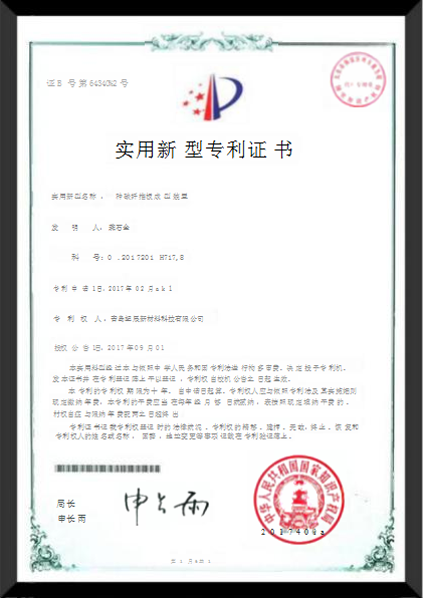
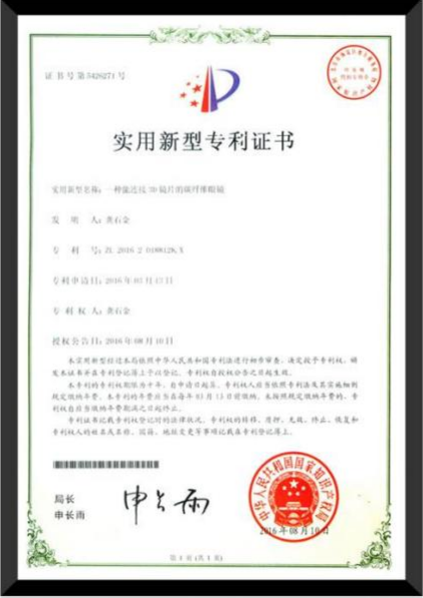
We have passed ISO 9001 management system and intellectual property management system certification. We have also been awarded the title of provincial high-tech enterprise and hold more than 50 patent certificates.
Partners
Currently, we cooperate with global industry-leading suppliers, including Toray from Japan, Mitsubishi from Japan, Hexcel from the United States, Zhongfu Shenying from China, Weihai Guangwei, Cathay Pacific, DuPont from the United States, Jushi from China, Sinoma Technology, Micron from the United States, Kentian from the United States, FK from the United States, and Daiplatinum from Sweden.


Types of Prepreg Equipment
We offer the following Product
Hot Melt Glue Solvent
The production line fully draws lessons from the advantages of similar equipment at home and abroad, and continuously improves and improves and improves the highly advanced pre-immersion machine designed and manufactured in the actual manufacturing process. It mainly adopts wet one-step process, which is suitable for soaking in glass fiber woven cloth. Suitable for weighing 200-600g / m2 Braoven cloth, including immersion process, high degree of automation, mature process, easy to operate.
Pre Preg Machines
The independent console is divided into roll tension control system, main control area and drying furnace temperature control area; roll tension control system can automatically closed loop control of the roll tension; the main control area is 10 inch touch screen, the main parameters of the equipment are set, adjust and display the whole process flow and various real-time data; the temperature control area of the drying furnace, control the temperature in the furnace, display and store the real-time temperature data, and provide digital interface to export the temperature data.
Specifications of Prepreg Equipment
We offer the following Product Specifications
|
Hot Melt Glue Solvent |
|
|
Product requirements |
(1) Product width: a maximum of 1500mm |
|
Raw and processed material |
Fiberglass woven cloth, carbon fiber woven cloth |
|
Production rate |
2-10m/min |
|
Equipment control and operation |
(1) A separate console adopts the 7-inch touch screen as the operation interface, and the device function parameters are visualized (2) The automatic tension controller can control the roll tension (3) With Siemens PLC as the main control unit, the control system is connected through the bus communication network to ensure the speed synchronization of the whole production line. |
|
Fiber unrolling |
(1) The inner diameter of the paper tube is Φ76mm, and the maximum winding diameter is Φ400mm (2) Duplex roll (3) Equipped with fully automatic tension magnetic powder damper, closed-loop tension control |
|
Pre Preg Machines |
|
|
Product specification |
Maximum of 1500mm |
|
Product width |
Maximum of 1500mm |
|
Resin content |
30% -60% ± 2% (when fiber cloth density deviation ± 1.5%, fiber weight deviation per unit area ± 2%) |
|
Raw materials |
Fiber cloth, fiber woven cloth |
|
Production speed |
1-5m/min, mechanical speed: 1-10m/min |
|
Power supply requirement |
AC380V± 5% 50 HZ three-phase four-wire system (with grounding wire, with zero wire) |
|
Overall dimension of equipment (length * width * height) |
12500mm * 3000mm * 3400mm (subject to the drawing) |
|
Total installed power |
30KW |
|
Equipment weight |
Approximately 8,000 kg |
Components of a Prepreg Machine
Fiber Unwinding System: The process begins with the fiber unwinding system, where rolls of dry fiber are fed into the machine. This system ensures a consistent and controlled feed of the reinforcement fibers.
Resin Impregnation Unit: This is the core of the prepreg machine. The fibers pass through a bath or a series of rollers that coat them with the resin. The resin impregnation unit ensures even distribution and saturation of the resin onto the fibers.
Pre-Dryer/Oven: After impregnation, the coated fibers pass through a pre-dryer or oven, where the resin is partially cured. This stage is critical as it controls the resin's viscosity and ensures the fibers remain flexible and tacky, making them easier to handle and store.
Cooling System: To stabilize the partially cured resin, the fibers are then cooled. This prevents further curing and maintains the prepreg's desired properties until it is ready for final processing.
Winding/Packaging System: Finally, the prepregs are wound onto rolls or cut into sheets, ready for transport and storage. The winding system ensures that the prepregs are tightly and uniformly rolled, preventing any damage during handling.
Craftsmanship of Hot Melt Glue Solvent
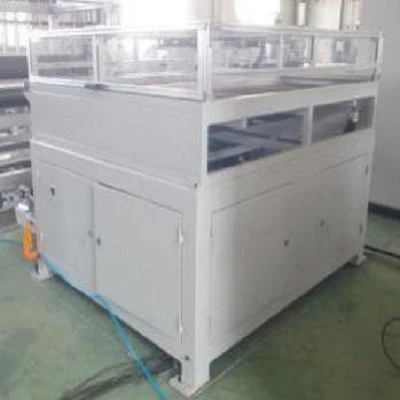
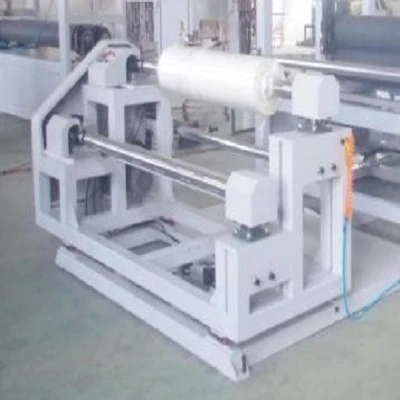

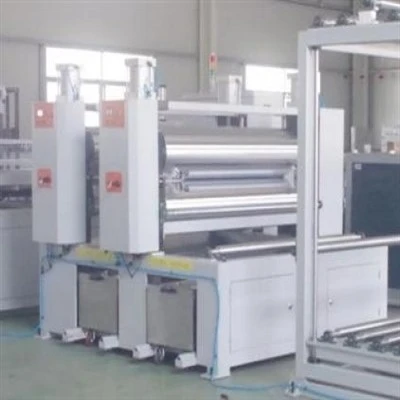
Roll Coating
A roll coater for hot melt is like a mechanical or electrical roll coater used for paint. When you have a large area to cover, roll coating is the applicator of choice.
The adhesive sits in a reservoir and is applied to the surface of a coating roller either by being dipped or pumped from the reservoir and brought into contact with the surface of the coating roll. A scraper blade or another roller then removes any excess adhesive, leaving behind a measured layer of hot melt adhesive.
The advantages of roll coaters are speed and efficiency akin to a printing press. Roll coating should only be applied to flat surfaces, however, like large panels for an RV or truck.
Roll coaters work well in conveyor assembly line production.
Transfer Printing
Transfer printing is similar to roll coating. However, a pattern is placed across the roller or pressed into a pad that picks up the adhesive. The applicator then rolls over the surface of the substrate and transfers the hot melt onto the product.
This method can be used with flat plates instead of rollers. Transfer printing is ideal for applying a very thin layer or an intricate pattern of adhesive and for use in small areas like the flaps and windows of envelopes.
Curtain Coating
Curtain coating works like a waterfall. The product that needs to be coated is pushed through a curtain of adhesive. A trough is placed underneath to collect the excess hot melt, which is then pumped back up into the waterfall applicator. Curtain coating is best for covering large areas with a moderately heavy coat of adhesive.
Advantages to this method include consistency, speed of application and ease of use in automated production lines. Curtain coating is not ideal for applying thin layers of adhesive, and not all adhesives run smoothly through curtain coating, limiting the types of hot melt eligible for this method.
Screen Printing
Screen printing is best suited for applying a controlled layer of adhesive to a specific area on a surface and is sometimes used for spot gluing or laying down a pattern of adhesive. Just like screen printing a T-shirt, the adhesive is pushed through a screen using a squeegee. The size of the openings in the screen will determine the thickness of the coat applied.
This process can be very labor intensive, so automatic screen presses can speed things up and make it a lot easier to work on a large volume of items. Equipment clean-up can be difficult, as screen printing is one of the messier application methods.
Our Certifications
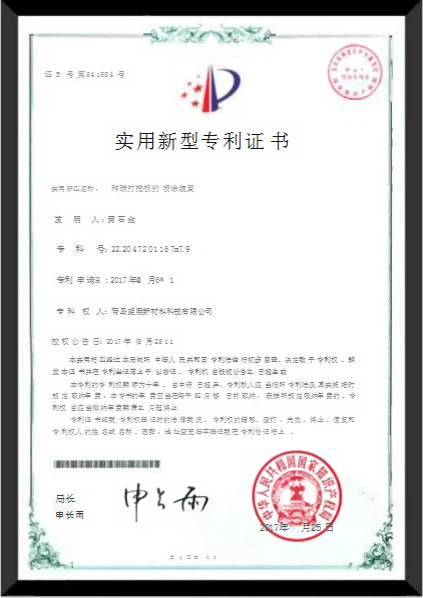


As one of the leading prepreg equipment manufacturers and suppliers in China, we warmly welcome you to buy high-grade prepreg equipment made in China here from our factory. All our products are with high quality and competitive price.
prepreg equipment, Hot Melt Glue Solvent, Pre Preg Machines