

We are an innovative enterprise specializing in the deep processing of carbon fiber, aramid fiber, flat fabric, three-dimensional weaving, and special texture blended, pre impregnated, and forged products, as well as molded, hot pressed, and extruded carbon fiber products.
Why Choose Us
Our Factory
Qingdao Wangzhan was established in 2012 and is a high-tech private enterprise leading the composite weaving industry.The factory covers an area of over 7000 square meters,300+Machine processing equipment.
Our Certificates
We have passed ISO 9001 management system and intellectual property management system certification. We have also been awarded the title of provincial high-tech enterprise and hold more than 50 patent certificates.
Partners
Currently, we cooperate with global industry-leading suppliers, including Toray from Japan, Mitsubishi from Japan, Hexcel from the United States, Zhongfu Shenying from China, Weihai Guangwei, Cathay Pacific, DuPont from the United States, Jushi from China, Sinoma Technology, Micron from the United States, Kentian from the United States, FK from the United States, and Daiplatinum from Sweden.


Types of Acuum Bagging Composites
We offer the following Product


Vacuum Sealant Tape
Vacuum sealant tape is used for sealing vacuum bags and mold parts. The sealing tape must have sufficient adhesion to the surface of the mold, but it cannot be too sticky to tear off the sealing tape on the vacuum bag film for repositioning. At the same time, after curing, the sealing tape must be cleanly peeled off from the surface of the mold.
Vacuum Bagging
Vacuum bagging is a copolymer film with high strength and elongation, which can directly contact resin. It is mainly used for room temperature molding, vacuum injection, and pre compaction of composite materials.
Resin Infusion Vacuum Pump
The vacuum introduction system equipment is a vacuum introduction device that integrates vacuum tanks, vacuum pumps, aggregate tanks, and control systems. The system adopts an automatically controllable vacuum pump, which can automatically adjust and control when the negative pressure of the system is insufficient to achieve the required vacuum state. It can also be controlled in two forms: automatic and manual.
Resin Infusion Mesh
Resin infusion mesh is suitable for the vacuum infusion process of composite materials, which can better eliminate residual air in the vacuum system and enable the resin to penetrate evenly into all parts of the product, effectively improving product quality.
Specification of Vacuum Bagging Composites
We offer the following Product specifications
|
Vacuum Sealant Tape |
|
|
Roll Size |
1/2 in wide x 25 ft long (12.7 mm wide x 7.6 m long) |
|
Thickness |
1/8 in (3.2 mm) |
|
Maximum Recommended Use Temperature |
400°F (204°C) |
|
Base Material |
Synthetic Rubber |
|
Color |
Yellow |
|
Resin Infusion Vacuum Pump |
|||
|
Main Pump |
Vgg 10 |
Vgg SV100B |
Vgg SV100B 2 Sets |
|
Rated Airflow |
10 m³/h |
100 m³/h |
200 m³/h |
|
Ultimate Pressure |
≤0. 089mbar |
≤0.5mbar |
≤0.5mbar |
|
Nominal Motor Rating |
1.5KW |
2.2KW |
2.2KW*2 |
|
Powder supply |
220V 1-phase 1-wire |
380V 3-phase 4-wire |
380V 3-phase 4-wire |
|
Buffer Tank Capacity |
50L/90L |
500L/600L |
500L/600L |
|
Size |
0.65*0.28*0.66m |
1.5*0.76*1.25m |
1.8*0.9*1.4m |
|
Weight |
46KG |
220KG |
300KG |
|
Resin Infusion Mesh |
|
|
Width |
41″ |
|
Thickness |
.030″ |
|
Material |
Polypropylene |
|
Color |
Green |
|
Configuration |
Extruded (Rhombic) |
|
Manufacturer |
Airtech International |
|
Manufacturer Part Number |
Greenflow 75 |
When advanced composites began to be used for (initially) military aerospace applications, where the resins needed to be cured at 350 F (175 C.), the bagging began to be done in an autoclave, a pressurized oven, heated with recirculating air. The primary reason for this was the need to pressurize not just the laminate in order to compact it, but more importantly to create resin hydrostatic pressure. This means increasing the liquid resin pressure (most are liquid or semi-liquid above 200 F/ 95 C.) to 90-100 psi (6-7 bar) so that monomers, water, and other volatiles in the resin would stay in solution instead of becoming gaseous and creating bubbles, (or "voids) in the laminate. Creating resin hydrostatic pressure is crucial to achieving good quality composite parts that are cured over 212 F., (100 C), the boiling point of water. The higher temperature you cure at, the more pressure you need. Think how a food pressure cooker stops water from boiling until a higher temperature (which is why it cooks faster.)
Composites cured at lower temperatures, i.e., room temperature, don't need hydrostatic pressure.
The best approach (memorize this) has turned out to be: 1. remove air before the cure cycle, and 2. suppress volatiles during the cure cycle, if curing at elevated temperature.
The very interior fibers are purposefully left dry so that air can be evacuated lengthwise along the fibers, not normal to the surface. This is what drawing vacuum accomplishes during the initial stages of laying up of prepreg parts before cure, (also called "debulking"), and during the initial stages of cure .
Application of Resin Infusion Vacuum Pump
Composite Molding
Resin infusion vacuum pumps are used to evacuate air from molding applications, ensuring materials bond without any air pockets, which could compromise structural integrity.
Manufacturing
Resin infusion vacuum pumps drive manufacturing processes across various industries, to ensure precision and quality, whether in casting automotive parts, etching semiconductor layers, or building products in airtight environments. Their ability to remove air and control environments helps in achieving the high standards required in modern manufacturing.
Packaging Industry
Resin infusion vacuum pumps are used to ensure that food, pharmaceuticals, and electronics are packaged in clean, air-free environments to extend the shelf life of perishable goods and protect sensitive components from atmospheric conditions that could lead to corrosion or failure. Vacuum packaging is also used to reduce the package volume, which helps in reducing shipping and storage costs.
Laboratory Research
Resin infusion vacuum pumps are commonly found in laboratories where they are used with instruments and applications that require low-pressure environments to function correctly.
Our Certifications
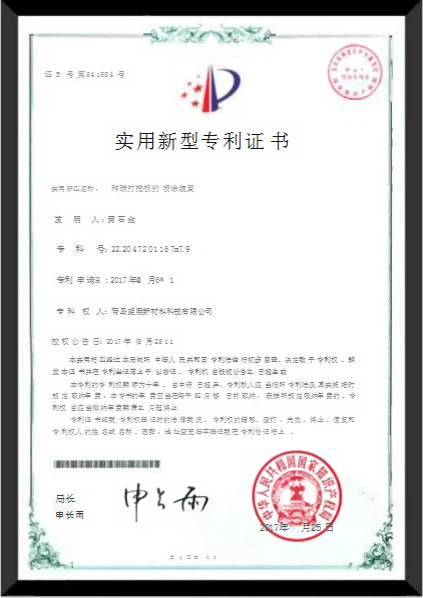
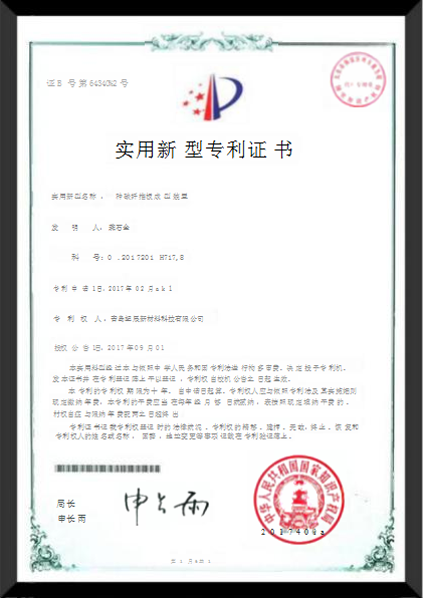
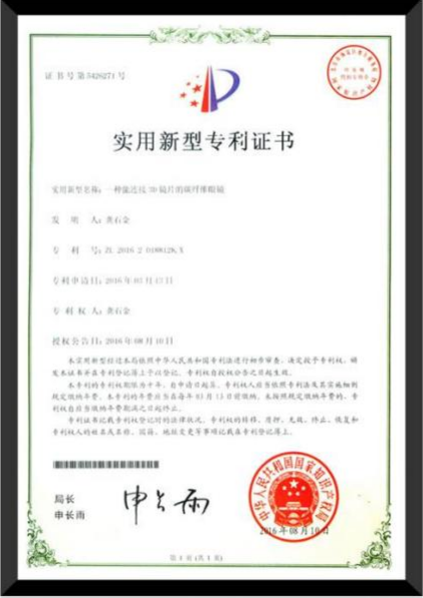


As one of the leading vacuum bagging composites manufacturers and suppliers in China, we warmly welcome you to buy high-grade vacuum bagging composites made in China here from our factory. All our products are with high quality and competitive price.
Resin Infusion Mesh, vacuum bagging composites, Vacuum Bagging