

Hey there! As a supplier of carbon fiber sleeves, I get a ton of questions from customers about how to tell if a carbon fiber sleeve is good quality. It's not always easy to figure out, especially if you're new to working with carbon fiber. But don't worry, I'm here to share some tips and tricks that will help you make an informed decision.
1. Look at the Fiber Quality
The first thing you wanna check out is the quality of the carbon fibers used in the sleeve. High - quality carbon fibers are strong, lightweight, and have a consistent diameter. Inferior fibers can have a lot of defects, like uneven thickness or breaks, which can seriously weaken the sleeve.
Good carbon fibers are usually made from polyacrylonitrile (PAN) precursor. PAN - based carbon fibers have excellent mechanical properties and are widely used in high - end applications. When you're looking at a carbon fiber sleeve, ask the supplier about the type of precursor used. If they can't tell you, that might be a red flag.
For instance, if you're using a carbon fiber sleeve for a Carbon Fiber Paddle, you need a high - strength sleeve. Low - quality fibers will make the paddle less durable and more likely to break during use.
2. Evaluate the Resin System
The resin is what holds the carbon fibers together in the sleeve. A well - chosen resin system is just as important as high - quality fibers. The resin should provide good adhesion to the fibers, protect them from damage, and contribute to the overall mechanical properties of the sleeve.
There are different types of resins used in carbon fiber composites, such as epoxy, polyester, and vinyl ester. Epoxy resins are the most popular choice for high - performance applications because they offer excellent strength, stiffness, and chemical resistance.
When you're assessing a carbon fiber sleeve, find out what type of resin is used. A sleeve with an epoxy resin system is generally a better choice than one with a polyester or vinyl ester resin. Also, check the resin - to - fiber ratio. A proper ratio ensures that the fibers are well - impregnated and that the sleeve has the right balance of strength and flexibility.
3. Check the Manufacturing Process
The way a carbon fiber sleeve is made can have a huge impact on its quality. A good manufacturing process ensures that the fibers are properly aligned and the resin is evenly distributed throughout the sleeve.
One common method for making carbon fiber sleeves is filament winding. In this process, carbon fibers are wound around a mandrel in a specific pattern, and then the resin is applied. The pattern of the winding affects the strength and stiffness of the sleeve in different directions. A skilled manufacturer will use the right winding pattern for the intended application.
Another important aspect of the manufacturing process is curing. The sleeve needs to be cured at the right temperature and for the right amount of time to ensure that the resin fully hardens and the fibers bond properly. If the curing process is not done correctly, the sleeve may have weak spots or delamination issues.
4. Examine the Surface Finish
The surface of a carbon fiber sleeve can tell you a lot about its quality. A high - quality sleeve should have a smooth, even surface without any visible defects like bubbles, cracks, or rough spots.
Bubbles in the surface can indicate problems with the resin application or the curing process. Cracks can be a sign of poor fiber - resin adhesion or excessive stress during manufacturing. Rough spots may suggest that the fibers are not well - protected or that there are issues with the finishing process.
If possible, inspect the sleeve in person. Run your fingers over the surface to feel for any irregularities. A good - quality carbon fiber sleeve will have a professional - looking surface that gives you confidence in its performance.
5. Test the Mechanical Properties
Testing the mechanical properties of a carbon fiber sleeve is the most accurate way to determine its quality. You can perform a few simple tests to get an idea of how strong and durable the sleeve is.
One test is the tensile test. In a tensile test, you apply a pulling force to the sleeve until it breaks. The maximum force the sleeve can withstand before breaking is a measure of its tensile strength. A high - quality carbon fiber sleeve should have a high tensile strength.

You can also test the sleeve's stiffness by applying a bending force. A stiff sleeve will resist bending more than a flexible one. Depending on your application, you may need a sleeve with a specific level of stiffness.
However, keep in mind that these tests require some specialized equipment. If you don't have the equipment, you can ask the supplier for test data or certifications. A reputable supplier should be able to provide you with information about the sleeve's mechanical properties.
6. Consider the Applications
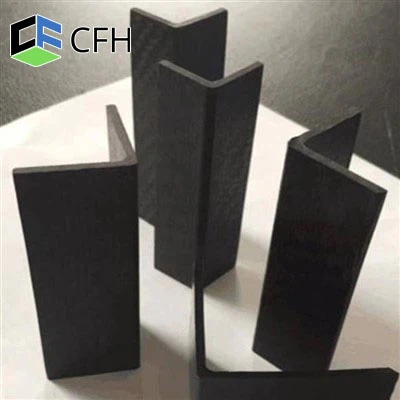
The quality requirements for a carbon fiber sleeve can vary depending on its application. For example, if you're using the sleeve for a Carbon Fiber Angle, you need a sleeve that can withstand high levels of stress and has good dimensional stability.
On the other hand, if the sleeve is for a more aesthetic application, like a decorative piece, you may be more concerned about the surface finish and appearance. So, before you decide if a carbon fiber sleeve is of good quality, think about how you're going to use it.
7. Check the Supplier's Reputation
Last but not least, the reputation of the supplier matters a lot. A reliable supplier will have a history of providing high - quality products and good customer service. You can check online reviews, ask for references, or look for certifications.
A supplier who is willing to answer your questions, provide detailed product information, and offer samples is more likely to be a trustworthy source. If a supplier is evasive or doesn't provide clear answers, it might be best to look elsewhere.
At my company, we're committed to providing top - quality carbon fiber sleeves. We use only the best materials and state - of - the - art manufacturing processes. We also offer a wide range of carbon fiber products, including Carbon Fiber Tubes and other custom - made items.
If you're in the market for carbon fiber sleeves or other carbon fiber products, don't hesitate to reach out to us. We're here to help you find the right solution for your needs. Whether you're a small business or a large - scale manufacturer, we can work with you to provide the best products at competitive prices.
References
- "Carbon Fiber Composites: Materials, Manufacturing, and Design" by David Hull and Timothy W. Clyne
- "Handbook of Carbon Fiber" edited by Peter Harris