

In the dynamic landscape of advanced materials manufacturing, pre preg materials have emerged as a cornerstone for various industries, from aerospace and automotive to sports equipment and marine applications. As a leading supplier of Pre Preg Machines, I'm excited to delve into the diverse types of pre preg machines available in the market. This exploration will not only shed light on the unique features and capabilities of each machine type but also help you make an informed decision when considering a pre preg machine for your manufacturing needs.
Hot Melt Pre Preg Machines
Hot melt pre preg machines are among the most widely used in the industry. These machines operate by applying a hot melt adhesive to the reinforcement fibers. The process begins with the unwinding of the fiber material, which then passes through a system where the hot melt adhesive is applied. The adhesive is heated to a molten state and precisely coated onto the fibers.
One of the key advantages of hot melt pre preg machines is their ability to produce high - quality pre preg materials with excellent resin distribution. The hot melt adhesive ensures a uniform coating, which is crucial for the mechanical properties of the final composite product. Additionally, hot melt pre preg machines are relatively fast, allowing for high - volume production.
The Hot Melt Glue Solvent used in these machines plays a vital role. It must have the right viscosity and bonding properties to ensure proper adhesion to the fibers. Different solvents can be used depending on the specific requirements of the application, such as temperature resistance and chemical compatibility.
Solvent - Based Pre Preg Machines
Solvent - based pre preg machines work by dissolving the resin in a solvent and then applying the resin - solvent solution to the reinforcement fibers. The solvent helps in achieving a thin and uniform coating of the resin on the fibers. After the coating process, the solvent is evaporated, leaving behind the resin - impregnated fibers.
One of the main benefits of solvent - based pre preg machines is their ability to handle a wide range of resins. This flexibility allows manufacturers to produce pre preg materials with different properties, such as high - strength, flame - retardant, or electrically conductive composites. However, solvent - based processes require proper ventilation and safety measures due to the presence of volatile solvents.
The evaporation process in solvent - based pre preg machines is critical. It must be carefully controlled to ensure that the solvent is completely removed without causing any damage to the resin or the fibers. This often involves the use of ovens or drying chambers with precise temperature and airflow control.
Powder - Based Pre Preg Machines
Powder - based pre preg machines use a dry powder resin to impregnate the reinforcement fibers. The powder resin is applied to the fibers, and then heat and pressure are applied to melt the powder and bond it to the fibers.
This type of machine offers several advantages. Firstly, powder - based pre preg materials have a long shelf life compared to solvent - based or hot melt pre preg materials. Secondly, the powder - based process is cleaner as it does not involve solvents, which reduces environmental concerns.

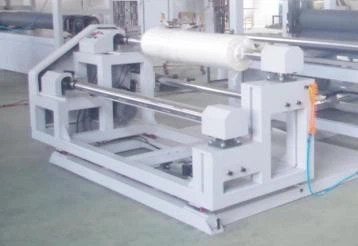
However, powder - based pre preg machines require precise control of the powder application and the heating and pressing process. Ensuring uniform powder distribution on the fibers is crucial for the quality of the final pre preg material.
Resin Transfer Molding (RTM) Pre Preg Machines
Resin Transfer Molding (RTM) pre preg machines are used to produce pre preg materials in a closed - mold system. In this process, the reinforcement fibers are placed in a mold, and then the resin is injected into the mold under pressure. The resin then impregnates the fibers, and after curing, a pre preg part is formed.
RTM pre preg machines are ideal for producing complex - shaped pre preg parts with high dimensional accuracy. They can also produce parts with a high fiber - to - resin ratio, which results in stronger and lighter composite products. However, the mold design and the resin injection process require careful engineering to ensure proper impregnation and curing.
Automated Tape Laying (ATL) and Automated Fiber Placement (AFP) Machines
Automated Tape Laying (ATL) and Automated Fiber Placement (AFP) machines are advanced pre preg machines used in large - scale and high - precision manufacturing. These machines are capable of laying down pre preg tapes or fibers in a precise pattern on a mold or a substrate.
ATL machines are typically used for flat or slightly curved surfaces. They can lay down wide tapes of pre preg material at high speeds, making them suitable for large - area production, such as aircraft wings. AFP machines, on the other hand, are more versatile and can handle complex geometries. They can place individual fibers or narrow tapes in a three - dimensional pattern, allowing for the production of highly customized pre preg parts.
The automation provided by ATL and AFP machines not only increases productivity but also improves the quality and consistency of the pre preg products. However, these machines are relatively expensive and require skilled operators and sophisticated programming.
Selecting the Right Pre Preg Machine
When selecting a pre preg machine for your manufacturing needs, several factors need to be considered. Firstly, the type of pre preg material you want to produce is a crucial factor. If you need high - volume production of simple - shaped parts, a hot melt or solvent - based pre preg machine may be suitable. For complex - shaped parts, RTM, ATL, or AFP machines may be more appropriate.
Secondly, the cost of the machine and the operating costs, including raw materials, energy consumption, and maintenance, should be taken into account. Some machines may have a higher upfront cost but lower operating costs in the long run.
Thirdly, the level of automation required also plays a role. If you have a large - scale production and need high precision and consistency, automated machines like ATL and AFP may be the best choice. However, if you have a small - scale operation or need more flexibility, a manual or semi - automated machine may be more suitable.
Contact Us for Your Pre Preg Machine Needs
As a trusted supplier of Pre Preg Machines, we understand the importance of choosing the right machine for your specific requirements. Our team of experts is ready to assist you in selecting the most suitable pre preg machine for your manufacturing process. Whether you are a small - scale manufacturer looking for a cost - effective solution or a large - scale industrial company in need of high - end automated equipment, we have the expertise and the product range to meet your needs.
If you have any questions or would like to discuss your pre preg machine requirements in detail, please feel free to reach out to us. We are committed to providing you with the best pre preg machine solutions and excellent customer service.
References
- ASM Handbook, Volume 21: Composites. ASM International.
- Advanced Composites Manufacturing Technology. Edited by Suresh G. Advani.
- Composite Materials: Design and Applications. Second Edition. Edited by David Hull and Timothy W. Clyne.